How to Automate Spring Boot Test Writing for Your Team Using LLMs and Custom Skills
Today we will review how to automate test writing for a team working on a Spring Boot application.
We could ask Cursor/Windsurf/Opencode to create a test just from a prompt. From a developer’s experience, this is the fastest way — but companies usually have their own standards, specifics for writing and maintaining the codebase, and best practices/patterns.
And yes, this approach works even without an internet connection. See: Part 1 — Local LLM setup. You can bootstrap your own LLM server and save developer resources.
In the long term, companies should consider RAG + ChromaDB. But for daily use, you can start with Skills.
A company can have a repository with a common set of Skills. If a developer wants to extend it, they create a PR with a new or modified Skill. New team members then get company-level standards out of the box — just like formatters and code styles in previous years.
To manage skills we will use:
https://github.com/numman-ali/openskills/
It allows to install custom Skills from different sources, including git repository. OpenSkill can generate Agents.md, which will already be used on the developer’s side by the AI agent.
Charging app to test
First of all we need this application, and thanks to Deepseek + Opencode + BigPickle and we already have Delivery system for Planet Express:
https://github.com/alexey-yurganov/jroom36-planet-express-delivery/tree/main
This is common Spring App with Data layer, Service Layer and REST API layer. We will create some tests on it.
Test Types
We plan to cover application with common types of tests:
- @WebMvcTest - for REST API Controllers
- @DataJpaTest - for Spring repositories
- @Testcontainers - for integration tests
- Mockito&Junit - for services
Create Skills
Let’s install OpenSkills to be able manage our set of skills:
For a first time, the response should look like:
Next one, let’s install common skills from anthropics
In interactive mode you could explore/select available Skills in this repo, by default all items are selected. We are interested in one specific skill named as:
- skill-creator - it will help create our own skills in common way
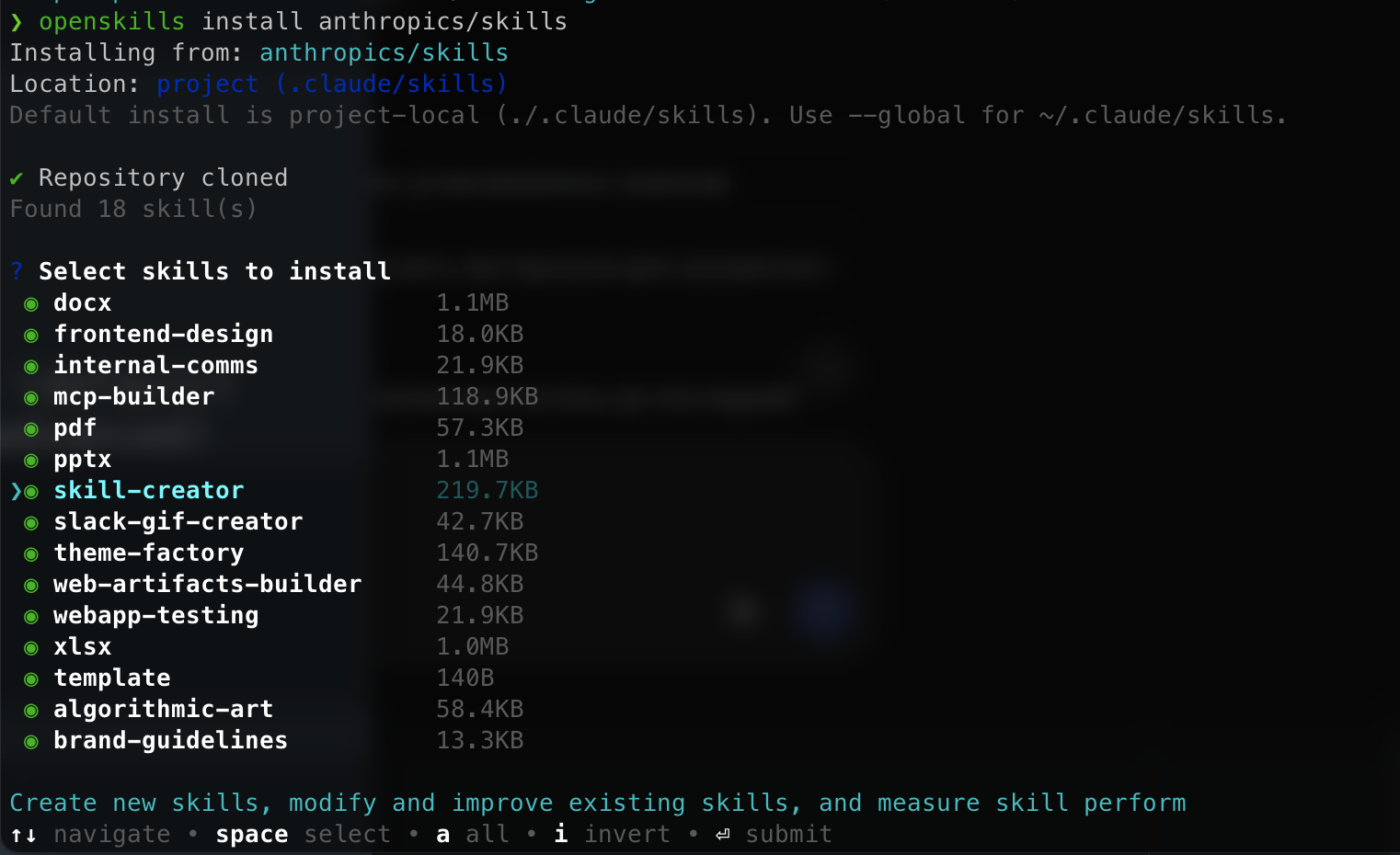
Because each dev could have different set of skills and from different repos this should not be part of SCM/git.
Skills & Unit Test for Spring Boot: Services, Controllers, Data
I use OpenCode but any agent could be used. Need to open project where skill skill-creator had been installed and ask from prompt
| |
OpenCode asked for some parameters. For this round, we will create a common skill to cover possible test types but technically you could split on separate skills and support them independently.
Skill created: spring-boot-testing Location: .claude/skills/spring-boot-testing/
| |
Now we could commit and push skill into repo, for example:
https://github.com/alexey-yurganov/spring-boot-testing-skills/tree/main/spring-boot-testing
Create test using spring-boot-testing skill
We could install skill into our project and generate some test:
| |
After that you could ensure that it is done and skill is available:
| |
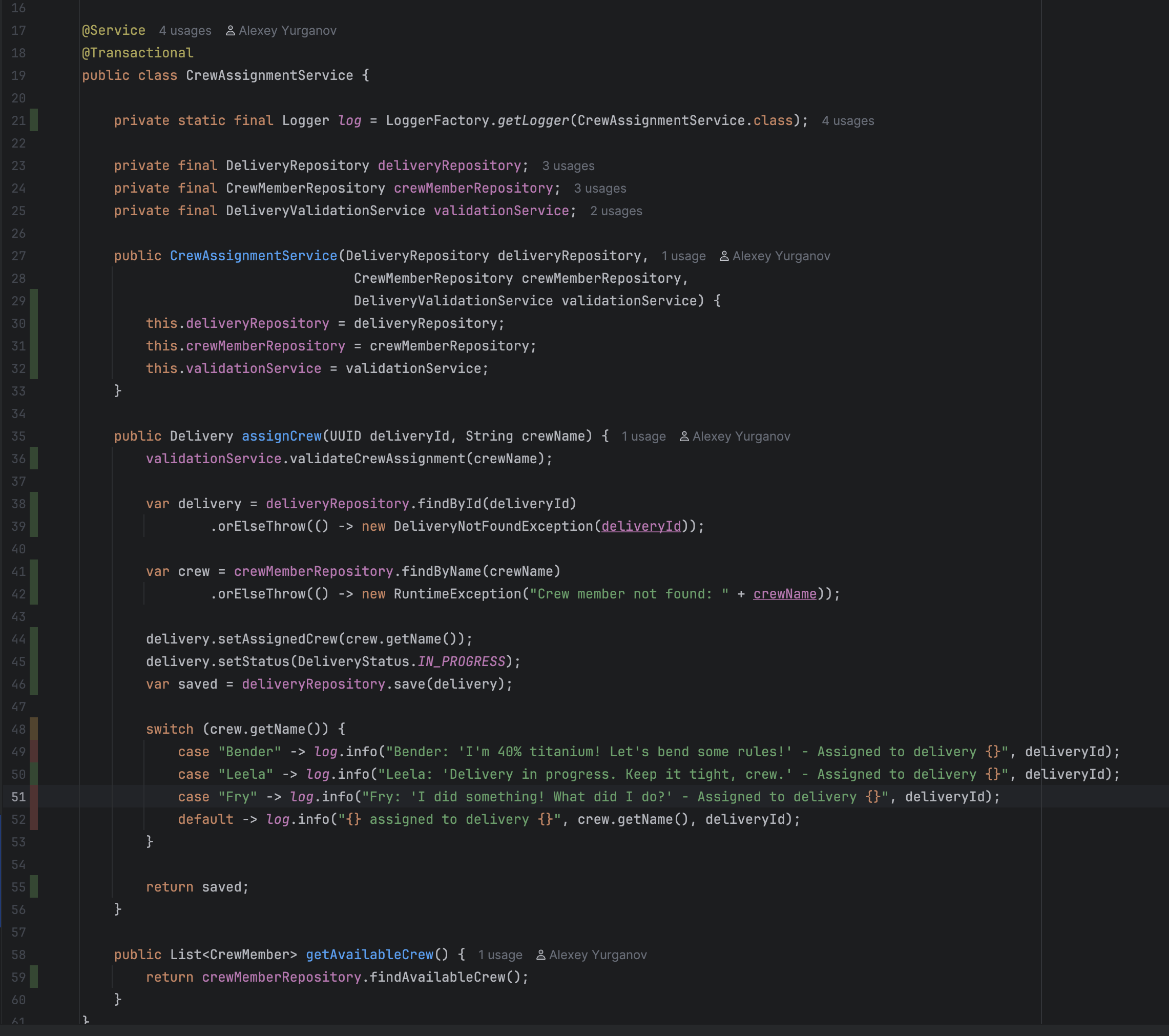
Time to create some test. For example we have Service
let’s ask OpenCode to create test for this, type this into the prompt of your Agent (OpenCode in my case)
| |
The test was created. If you run the command to execute all tests, you can verify that they pass successfully:
| |
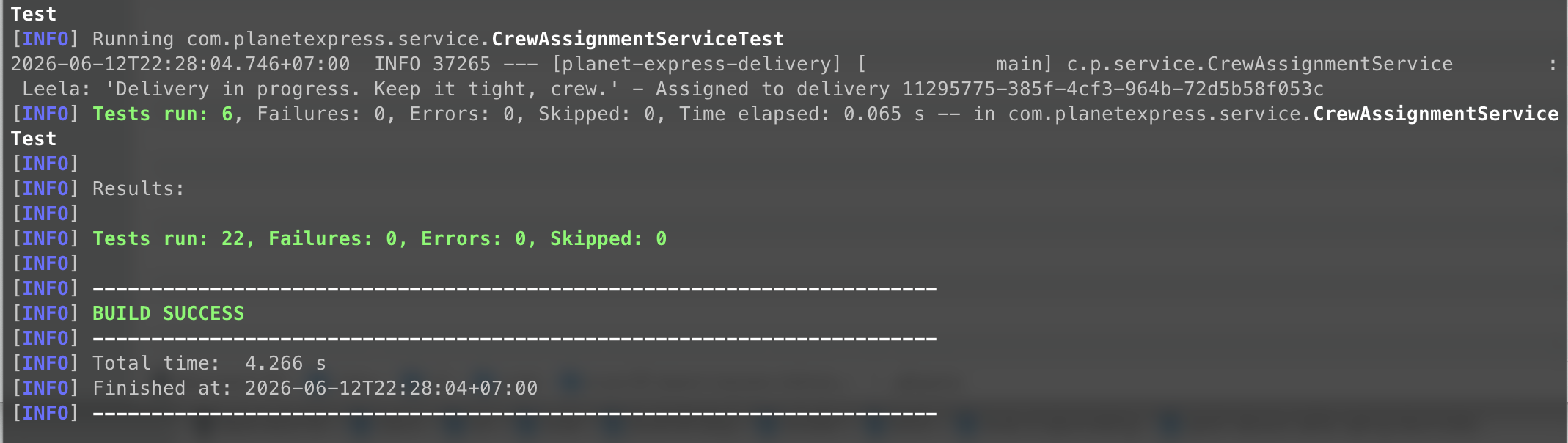
Generated test could be reviewed here:
Lets see code-coverage (85%):
Observations and Limitations
- Yes, there are some hardcoded strings — but this is due to the original codebase we used for testing.
- Yes, some scenarios could be added to handle all branches and improve code coverage.
- Yes, it could use a logger via @Log.
There are other parts that could be enhanced based on your team’s rules. Next time, the generated tests will be free of these issues.
Homework: try to generate tests for Repositories and Integration tests, it is not committed and should not force conflicts.
Summary
In this article, we showed how a team can systematically automate Spring Boot test writing using AI and OpenSkills.
Key points
- Plain prompts are fast but inconsistent across developers.
- Custom Skills encode your company’s best practices and apply them automatically.
- OpenSkills lets you manage Skills as code — install, sync, review via PRs.
- No internet? No problem. You can use local LLMs (see Part 1).
- Real example: We generated a test for
CrewAssignmentServicewith 85% code coverage — and immediately identified areas for improvement (hardcoded strings, logging, missing branches).
Homework from the article
- Generate tests for Repositories and Integration tests
- Adapt generated tests to your team’s internal standards
- Ensure no conflicts with existing code
Final thought
A custom Skill is not just a prompt template. It is:
- ✅ An executable coding standard — rules applied automatically, not just documented
- ✅ A knowledge distribution system — update once, everyone gets the new standard
- ✅ An integration hub — can call CI/CD pipelines, SonarQube, Jira, or internal APIs
This approach lowers the onboarding barrier for new developers, speeds up code reviews, and makes tests predictable and maintainable.